
Keynote Lectures (in alphabetical order)
The Opportunity for Continued Evolution of Infrastructure as an Intelligent Platform for Delivering More Efficient and Resilient Services to Communities
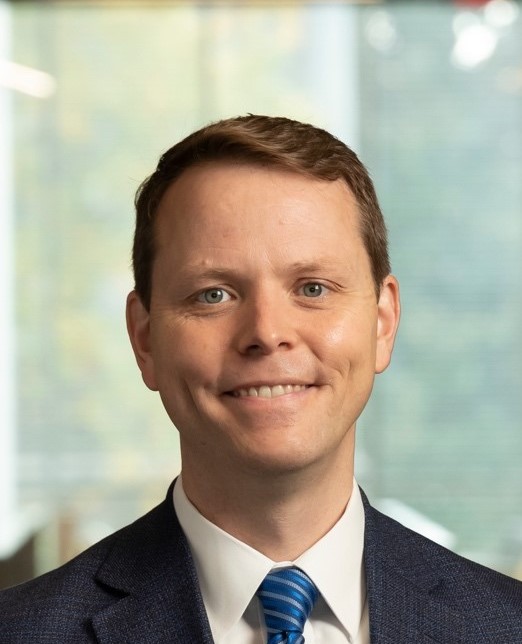
Jerome P. Lynch, Ph.D., F.EMI
Vinik Dean of Engineering
Fitzpatrick Family University Distinguished Professor of Engineering
Professor of Civil and Environmental Engineering
Professor of Electrical and Computer Engineering
Duke University, Durham, NC
Dr. Jerome Lynch is the Vinik Dean of Engineering and Fitzpatrick Family University Distinguished Professor of Engineering at Duke University. Prior to joining Duke in 2022, he was a tenured faculty member in the Department of Civil and Environmental Engineering at the University of Michigan including serving as the Department Chair of Civil and Environmental Engineering. Dr. Lynch’s research interests are in advancing cyber-physical system (CPS) architectures that combine sensing, computing, and controls to create intelligent infrastructure systems. He is best known for his research portfolio in structural health monitoring. He was the founding Director of the University of Michigan Urban Collaboratory, a cross-campus research institute that facilitates close collaboration with city stakeholders to prototype solutions to community challenges using information technologies and socially engaged design methods. Dr. Lynch’s impact has been recognized by several honors including the 2009 Presidential Early Career Award for Scientists and Engineers, 2012 ASCE Leonardo da Vinci Award, 2014 ASCE Huber Award, and 2024 ASCE George W. Housner Structural Control and Monitoring Medal. He was also elected Fellow of the ASCE Engineering Mechanics Institute in 2021. Dr. Lynch completed his graduate studies at Stanford University where he received his Ph.D. in Civil and Environmental Engineering, M.S. in Civil and Environmental Engineering, and M.S. in Electrical Engineering. Dr. Lynch also received his B.E. in Civil and Environmental Engineering from the Cooper Union.
Intelligent Disaster Mitigation: AI-Enabled Strategies for Rapid Post-Earthquake Structural Assessment

Billie F. Spencer, Jr.
Department of Civil and Environmental Engineering, University of Illinois at Urbana-Champaign
Prof. Spencer is a pioneer in smart structures technology, with foundational contributions in structural health monitoring, structural control, stochastic fatigue, stochastic computational mechanics and topology optimization, and computer vision and machine learning for infrastructure assessment. He has directed more than $70 million in sponsored research and authored over 750 technical papers and reports, including two books. He was the first to study and design magnetorheological fluid dampers for protecting structures against earthquakes and strong winds, overcoming key limitations of traditional passive systems and power-intensive active control approaches now widely used in practice. He led the NSF George E. Brown Network for Earthquake Engineering Simulation system integration project, the nation’s first major engineering cyberinfrastructure initiative, and directed the NEES MUST-SIM hybrid simulation facility at the University of Illinois. His research on smart wireless sensor networks integrates advanced computing with self-interrogating sensing systems for large-scale structural monitoring, including landmark deployments on the Jindo Bridge in South Korea and the Dubai Eye in the United Arab Emirates, the largest wireless smart sensor implementations for civil infrastructure to date. More recently, he has led advances in computer vision-based inspection and developed the first framework for topology optimization under stochastic dynamic loading, enabling optimal design of resilient infrastructure. Prof. Spencer is a Distinguished Member of ASCE and a Foreign Member of the Chinese Academy of Engineering, the Engineering Academy of Japan, and the Polish Academy of Sciences.
Abstract:
In the aftermath of an earthquake, rapid structural inspection and evaluation are critical to ensure restoration of the normal order of life, work, and production. Traditional manual visual assessments by certified inspectors are slow, risky, and subjective, with limited availability delaying inspections. This lecture presents two approaches for automated rapid post-earthquake safety assessment. The first uses sparse acceleration measurements to define damage-sensitive features, inferred through a convolutional neural network. Validated experimentally at E-Defense in Japan, it proves effective for high-rise buildings. The second employs commercial UAV-collected images and a graphics-based digital twin (GBDT), incorporating finite element (FE) and photo-realistic computer graphics (CG) models. This approach is illustrated for a 45-story building in Guangzhou, China. These strategies enable rapid evaluation and efficient decision-making post-earthquake.
From Measurements to Structural State: The Inverse Finite Element Method as a Physics-Based Reconstruction Tool for Modern SHM

Cecilia Surace
Department of Structural, Geotechnical and Building Engineering, Politecnico di Torino
Cecilia Surace is Associate Professor of Structural Mechanics at Politecnico di Torino, Department of Structural, Geotechnical and Building Engineering. She leads the BIOMAST Lab (BIO-MAterials and STructures Laboratory), where her research focuses on structural dynamics, nonlinear mechanics, and structural health monitoring, with particular emphasis on damage identification, inverse methods, and shape sensing. Her work bridges civil, aerospace, and biomedical engineering, including the mechanical modelling of materials for biomedical applications. She has been involved in several national and international research projects, has authored numerous peer-reviewed publications, and has supervised doctoral and master’s research in structural mechanics across engineering disciplines.
Abstract:
Structural Health Monitoring is increasingly supported by advanced sensing technologies, data-driven methods and physics-based models. Within this broad landscape, the reconstruction of physically meaningful structural information from measurements remains an important challenge. This keynote will discuss the role of the inverse Finite Element Method (iFEM) as a physics-based approach for structural state reconstruction, with particular attention to strain-based monitoring. The presentation will introduce the main concepts behind iFEM and place the method within the wider SHM ecosystem, highlighting its relationship with other model-based and data-driven approaches. Examples from different structural applications will be used to illustrate the evolution of the method and its potential for large and complex structures. The integration of physics-based reconstruction with digital twins and emerging data-driven methodologies will also be considered. The keynote will conclude with perspectives on the role of state reconstruction in future SHM systems.
AI-driven models for local damage identification and structural performance/reliability assessment based on vibration monitoring
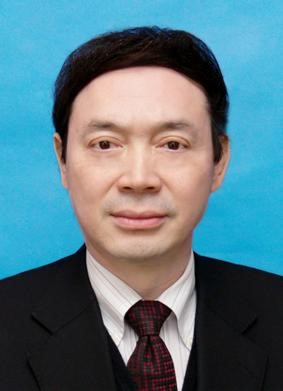
Professor Zhishen Wu
Henan University of Technology
Southeast University, China
Ibaraki University, Japan
Dr. Zhishen Wu is now president of Henan University of Technology, a chair professor at Southeast University in China and a professor emeritus at Ibaraki University in Japan. His research interests include carbon/basalt fibers and FRP composite technologies, advanced sensor technologies and structural health/risk/disaster monitoring, control and management.
He has published 16 books and over 600 papers in refereed journals, holds over 100 authorized patents and contributed to 30 standards and guidelines as one of the leaders. His many awards include the JSCE Research Award in 1990, the JSCM Technology Award in 2007, 2009 International SHM Person of the Year Award, IIFC medal in 2016 and the Aftab Mufti Life-Time Achievement Medal of ISHMI in 2023, National Prize for Progress in Science &Technology and for Technology Innovation of China in 2012 and 2017 etc.
He is currently the president of the International Society for Basalt Fibers and Composites (ISBFC) and has served as the president of ISHMII for 2017-2023. He serves as an editor, associate editor, editorial board member for more than ten international journals, including as the founding Editor-in-Chief of the International of Sustainable Materials and Structural Systems. He is a fellow of ASCE, JSCE, ISHMII, IIFC and an international fellow of the Engineering Academy of Japan, the Canadian Academy of Engineering and the European Academy of Sciences and Arts, etc.
Abstract:
Local damage identification based on changes in structural dynamic characteristics is an important issue in structural health monitoring and safety assessment of civil engineering structures. Global dynamic characteristics obtained from vibration responses have provided a well-established theoretical and methodological basis for identifying global stiffness degradation and significant structural damage. However, because civil engineering structures are generally large in scale and local damage often
induces only limited changes in global dynamic characteristics, conventional vibration- based methods remain limited in their sensitivity and serviceability to early-stage damages.
To address these challenges, this keynote first presents multi-scale dynamic damage identification methods based on acceleration, deformation, and macro-strain responses.
To enhance the sensitivity of acceleration and dynamic deformation responses to local damages, wavelet neural networks and AI-based methods are employed to extract damage-sensitive features from structural dynamic responses. To improve the identification of early-stage damages, dynamic macro-strain distribution is employed to develop strain-mode-based damage identification algorithms for various damage scenarios, including cracking, corrosion, wire breakage, scour, and localized stiffness degradation. Together, these approaches provide a multi-scale framework for damage identification from global structural responses to local damage.
Building upon damage identification, AI-driven models are further developed for structural performance assessment. Damage-sensitive features extracted from acceleration, dynamic deformation, and macro-strain responses provide a generalized data-driven basis for characterizing structural performance and its degradation. By integrating monitoring responses, identified damage features, and performance information, the relationship between structural dynamic characteristics and performance states can be established for condition assessment.
Furthermore, for structural-level safety and reliability assessment, the knowledge reasoning and multi-source information fusion capabilities of AI large models are utilized to integrate monitoring data, damage identification results, and structural performance information. Bayesian probabilistic analysis is incorporated to account for uncertainties and update structural state information, establishing an intelligent assessment framework linking vibration-based monitoring, local damage identification, performance assessment, and structural reliability. These key technologies have been applied to the Dongwuyang Grand Bridge, the Huangmaohai Cross-Sea Passage, the Nanjing Yangtze River Bridge, and various other large-scale civil infrastructure projects.
30-year Field Monitoring of Long-span Bridges in Hong Kong
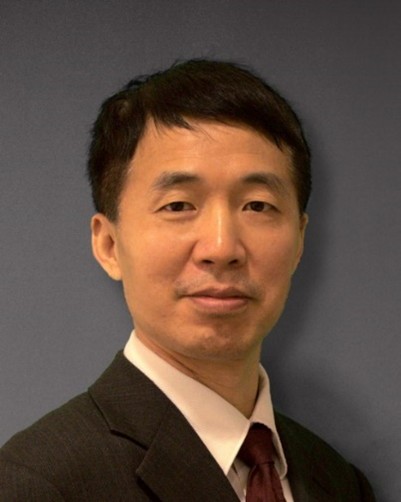
Professor Yong Xia
Department of Civil and Environmental Engineering, The Hong Kong Polytechnic University
Prof. Yong Xia is a Professor at The Hong Kong Polytechnic University, Associate Dean of Graduate School, and the Director of the Guangdong-Hong Kong Joint Laboratory for Marine Infrastructure. His main research areas include structural health monitoring, substructuring methods, and structural dynamics. He obtained his PhD degree from Nanyang Technological University, Singapore, in 2002 and joined The Hong Kong Polytechnic University in 2006. He has led or participated in more than 20 large-scale structural health monitoring projects, including the 1377-m long main span Tsing Ma Bridge, 55-km long Hong Kong–Zhuhai–Macao Bridge, 600-m tall Canton Tower, and 632-m tall Shanghai Tower. He has published over 200 refereed international journal papers, co-authored three research books, and secured over 50 research projects. Dr. Xia is now the Co-Editor-in-Chief of Advances in Structural Engineering. He was awarded the Nishino Prize (2013), State Technological Innovation Award (2018), President’s Award for Knowledge Transfer (2023), ASCE Greater China Distinguished Leadership Medal (2025), and SHM Person of the Year Award (2025), among many others.
Abstract:
Since 1997, the Tsing Ma Bridge, Kap Shui Mun Bridge, and Ting Kau Bridge in Hong Kong have been equipped with a long-term health monitoring system, the world’s first batch of the kind. This study reports the first-hand field monitoring data of these bridges from 1997 to 2026. The 30-year data provide an invaluable and rare opportunity to examine the long-term characteristics of the environments (air temperature and solar radiation), loads (vehicles, trains, winds, and bridge temperature), responses (strain and displacement), and their relationships, thereby enabling the assessment of the bridges’ load evolution and structural condition over time. The traffic load-induced fatigue damage and nature frequency variations are also estimated. The current status and recent update of the health monitoring system are also reported. Lastly, prospects of bridge health monitoring (for example, bridge population-based monitoring) are discussed. The super-long-term monitoring data of the bridges provide a benchmark for many other bridge monitoring systems worldwide.