
Keynote Lectures (in alphabetical order)
The Opportunity for Continued Evolution of Infrastructure as an Intelligent Platform for Delivering More Efficient and Resilient Services to Communities
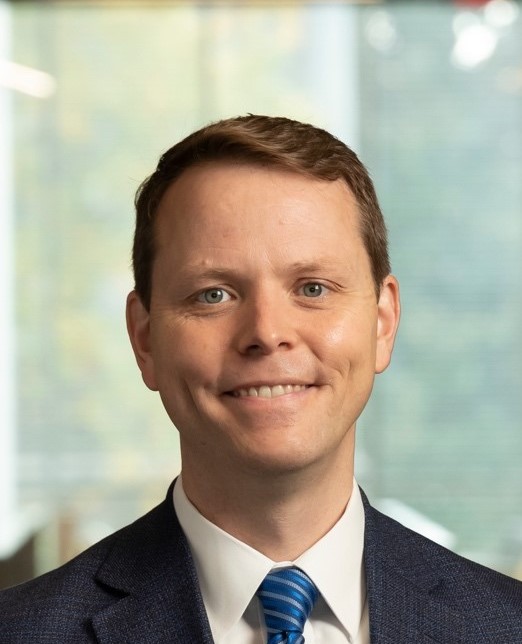
Jerome P. Lynch, Ph.D., F.EMI
Vinik Dean of Engineering
Fitzpatrick Family University Distinguished Professor of Engineering
Professor of Civil and Environmental Engineering
Professor of Electrical and Computer Engineering
Duke University, Durham, NC
Dr. Jerome Lynch is the Vinik Dean of Engineering and Fitzpatrick Family University Distinguished Professor of Engineering at Duke University. Prior to joining Duke in 2022, he was a tenured faculty member in the Department of Civil and Environmental Engineering at the University of Michigan including serving as the Department Chair of Civil and Environmental Engineering. Dr. Lynch’s research interests are in advancing cyber-physical system (CPS) architectures that combine sensing, computing, and controls to create intelligent infrastructure systems. He is best known for his research portfolio in structural health monitoring. He was the founding Director of the University of Michigan Urban Collaboratory, a cross-campus research institute that facilitates close collaboration with city stakeholders to prototype solutions to community challenges using information technologies and socially engaged design methods. Dr. Lynch’s impact has been recognized by several honors including the 2009 Presidential Early Career Award for Scientists and Engineers, 2012 ASCE Leonardo da Vinci Award, 2014 ASCE Huber Award, and 2024 ASCE George W. Housner Structural Control and Monitoring Medal. He was also elected Fellow of the ASCE Engineering Mechanics Institute in 2021. Dr. Lynch completed his graduate studies at Stanford University where he received his Ph.D. in Civil and Environmental Engineering, M.S. in Civil and Environmental Engineering, and M.S. in Electrical Engineering. Dr. Lynch also received his B.E. in Civil and Environmental Engineering from the Cooper Union.
Intelligent Disaster Mitigation: AI-Enabled Strategies for Rapid Post-Earthquake Structural Assessment

Billie F. Spencer, Jr.
Department of Civil and Environmental Engineering, University of Illinois at Urbana-Champaign
Prof. Spencer is a pioneer in smart structures technology, with foundational contributions in structural health monitoring, structural control, stochastic fatigue, stochastic computational mechanics and topology optimization, and computer vision and machine learning for infrastructure assessment. He has directed more than $70 million in sponsored research and authored over 750 technical papers and reports, including two books. He was the first to study and design magnetorheological fluid dampers for protecting structures against earthquakes and strong winds, overcoming key limitations of traditional passive systems and power-intensive active control approaches now widely used in practice. He led the NSF George E. Brown Network for Earthquake Engineering Simulation system integration project, the nation’s first major engineering cyberinfrastructure initiative, and directed the NEES MUST-SIM hybrid simulation facility at the University of Illinois. His research on smart wireless sensor networks integrates advanced computing with self-interrogating sensing systems for large-scale structural monitoring, including landmark deployments on the Jindo Bridge in South Korea and the Dubai Eye in the United Arab Emirates, the largest wireless smart sensor implementations for civil infrastructure to date. More recently, he has led advances in computer vision-based inspection and developed the first framework for topology optimization under stochastic dynamic loading, enabling optimal design of resilient infrastructure. Prof. Spencer is a Distinguished Member of ASCE and a Foreign Member of the Chinese Academy of Engineering, the Engineering Academy of Japan, and the Polish Academy of Sciences.
In the aftermath of an earthquake, rapid structural inspection and evaluation are critical to ensure restoration of the normal order of life, work, and production. Traditional manual visual assessments by certified inspectors are slow, risky, and subjective, with limited availability delaying inspections. This lecture presents two approaches for automated rapid post-earthquake safety assessment. The first uses sparse acceleration measurements to define damage-sensitive features, inferred through a convolutional neural network. Validated experimentally at E-Defense in Japan, it proves effective for high-rise buildings. The second employs commercial UAV-collected images and a graphics-based digital twin (GBDT), incorporating finite element (FE) and photo-realistic computer graphics (CG) models. This approach is illustrated for a 45-story building in Guangzhou, China. These strategies enable rapid evaluation and efficient decision-making post-earthquake.
Keynote Lecture

Cecilia Surace
Department of Structural, Geotechnical and Building Engineering, Politecnico di Torino
Cecilia Surace is Associate Professor of Structural Mechanics at Politecnico di Torino, Department of Structural, Geotechnical and Building Engineering. She leads the BIOMAST Lab (BIO-MAterials and STructures Laboratory), where her research focuses on structural dynamics, nonlinear mechanics, and structural health monitoring, with particular emphasis on damage identification, inverse methods, and shape sensing. Her work bridges civil, aerospace, and biomedical engineering, including the mechanical modelling of materials for biomedical applications. She has been involved in several national and international research projects, has authored numerous peer-reviewed publications, and has supervised doctoral and master’s research in structural mechanics across engineering disciplines.
Digital Twin-based Health Monitoring of Long-span Bridges
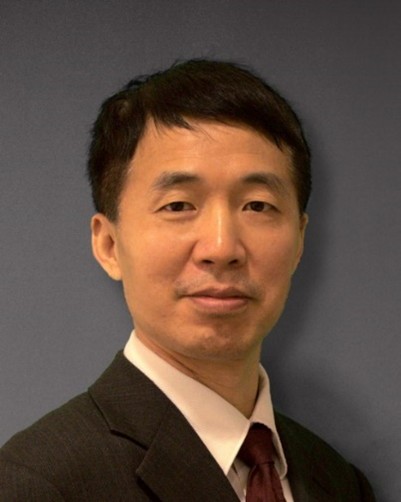
Professor Yong Xia
Department of Civil and Environmental Engineering, The Hong Kong Polytechnic University
Acoustic emission (AE) has advanced rapidly in recent years, driven by the adoption of AI-based signal processing and real-time decision-making approaches, which enable more rapid and efficient damage detection in civil infrastructure. This special session will focus on recent advances in AE sensing, data processing, and interpretation for assessing the integrity of civil structures such as bridges, buildings, pipelines, nuclear power plants, and composite systems. Topics include sensor development, wave propagation modelling, damage localization, AE-supported structural assessment, AI-based signal classification, and integration of AE with other SHM methods and digital twin frameworks. The session aims to bring together researchers and practitioners to share innovations, experimental work, field applications, and future directions for AE-based SHM.